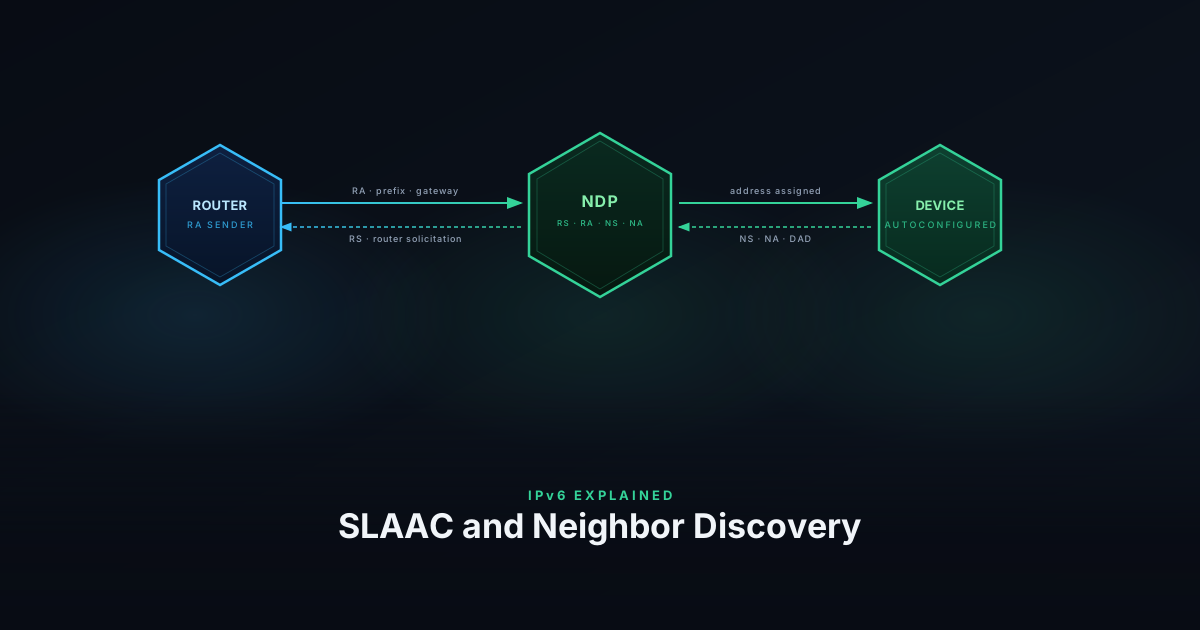
IPv6 Explained: SLAAC and Neighbor Discovery
IPv6 replaces ARP with NDP and lets devices configure addresses without a server. Here's how Neighbor Discovery, SLAAC, and DHCPv6 work together.
10 min
ipv6

A practical series that works through IPv6 from the ground up — no assumed prior knowledge beyond basic networking. Covers addressing and packet structure, how SLAAC and DHCPv6 hand out addresses, how ISPs delegate prefixes and how routers subdivide and route them, transition technologies for mixed IPv4/IPv6 environments, multicast and MLD, and first-hop security mechanisms. Aimed at network engineers and anyone making the jump to dual-stack.
IPv6 replaces ARP with NDP and lets devices configure addresses without a server. Here's how Neighbor Discovery, SLAAC, and DHCPv6 work together.
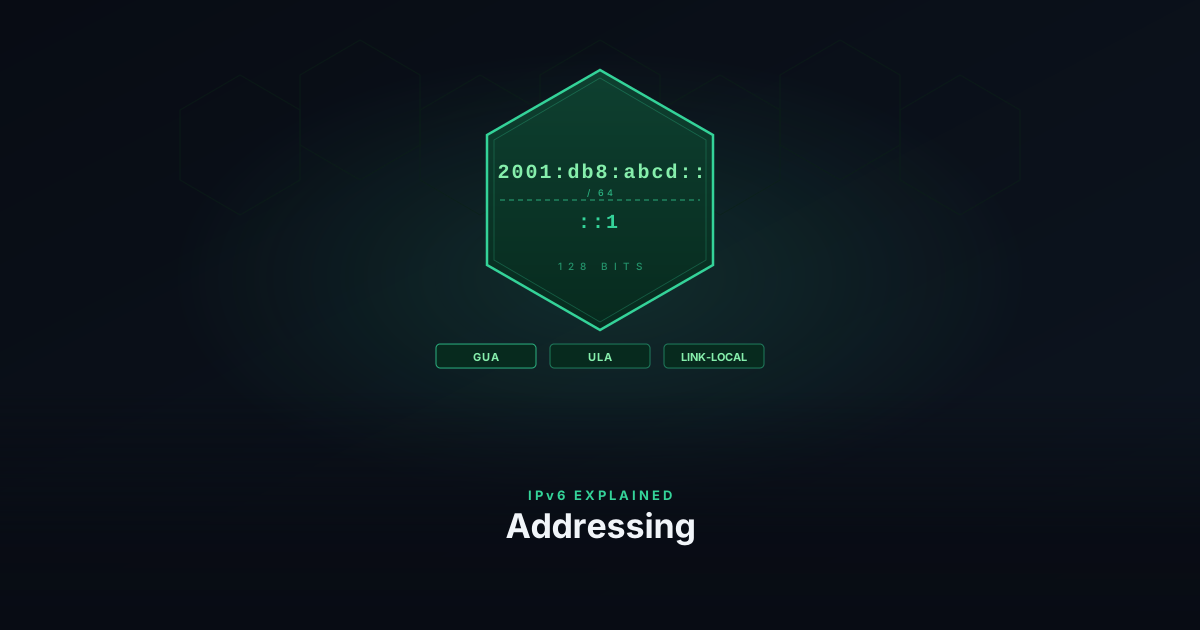
IPv6 replaces 32-bit addresses with 128-bit ones — but the change goes deeper than size. Here's how IPv6 addresses are structured, what the different types mean, and how subnetting works.